Trellis
Moves a team's work across a board, with an AI agent at each step. People approve every gate and merge every change.
What it is
Trellis moves a team’s work across a board, one step at a time. An AI agent works each step, and people approve the gates. Each board sets its own steps, so it is not tied to one kind of work. A workflow for code changes has these steps:
- Intake. A person asks for a change. An advisor agent checks the request first and looks for work that already exists.
- Ticket. The request becomes a ticket. People write its acceptance criteria, and agents never change them.
- Build. A coding agent edits the code, runs the tests and opens a pull request.
- Review. A second agent checks the work and comments on the ticket.
- Merge. A person merges. This workflow keeps the merge with a person, as a choice of trust.
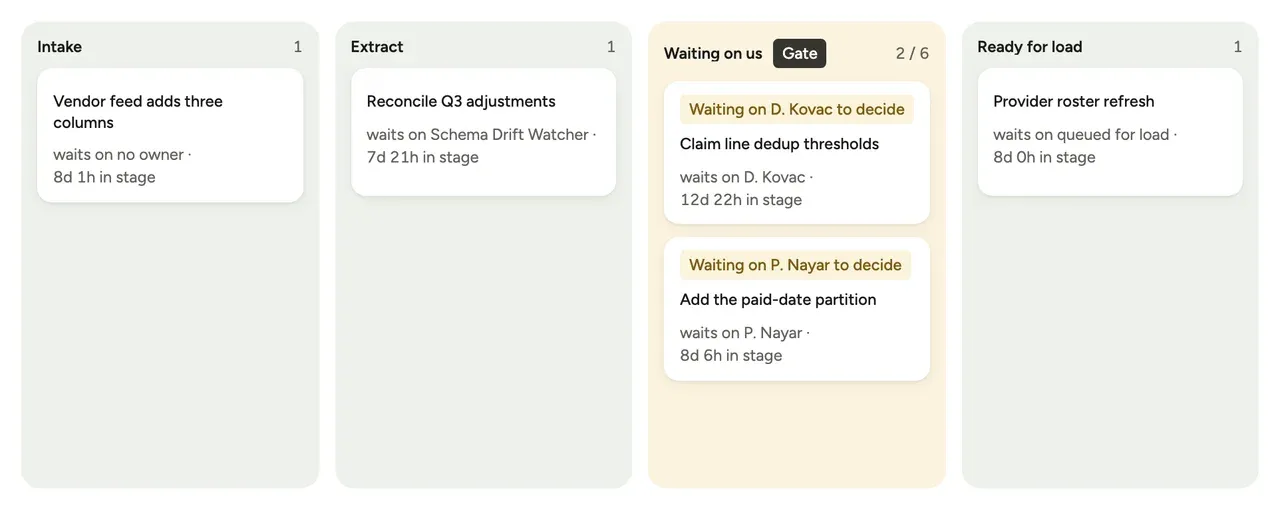
A board shows each ticket, its step and its cost, and updates live.
One design decision
The steps are data, not code. Each workflow is a short file that lists its steps and prompts. A new kind of work needs a new file, not a new release.
The rules it keeps
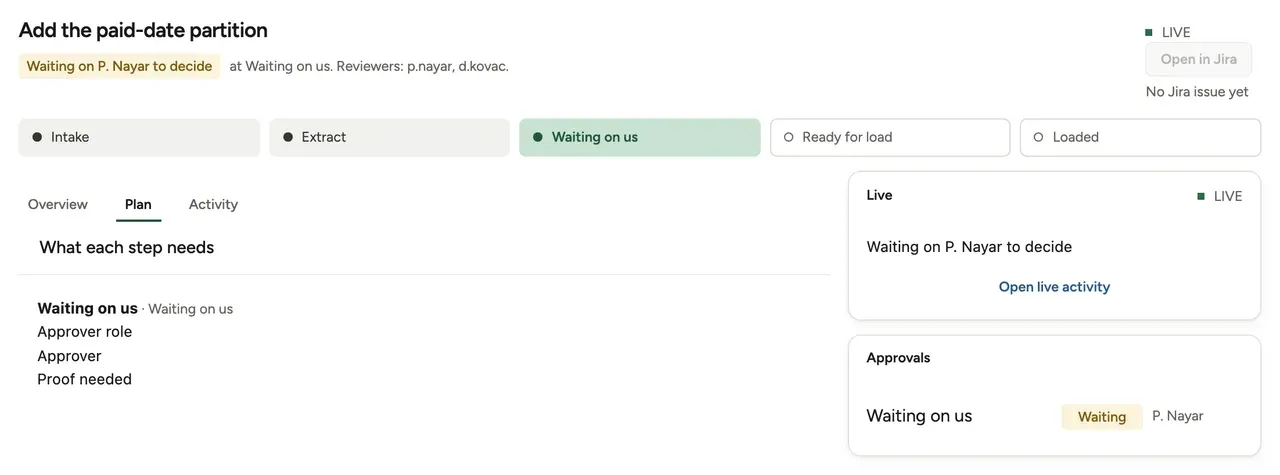
- People own the gates. An agent never approves its own work. It names the person who must approve.
- No silent stops. When a ticket cannot go on, the agent says why, who can unblock it, and what comes next.
- Numbers come from commands. Test results and costs come from tools that ran, not from a model’s opinion.
- Development systems only. Agents can change development systems, never test or production systems.
- Cost on every ticket. Trellis records what each step costs, so a team can see the price of the work.
How it runs
Trellis is packaged as Docker images, with a Helm chart for Kubernetes.
- One chart. It runs the API, the workers, the web app, Postgres and Redis.
- On by default. The chart turns on ingress, TLS, network policies and autoscaling.
- Options. Monitoring, backups and an external secret store are settings in the chart.
- Tested install. A smoke test installs the chart on a local Kubernetes cluster.
Status
Trellis is in active development. The code is private for now.